
Skip to content

Precision, layer by layer.

From scan to design, from design to part.

Upload your part and leave the rest to us.

3D printing, 3D scanning and reverse engineering across Türkiye

Skip animation

Services

Choose one of four ways to get started

Each card opens a step-by-step quote form. The last step is the same for all: contact details and the privacy notice. There is no payment or shopping cart on the site.

Testing & Analysis

We test your material.

We test your 3D-printed parts with laboratory equipment and verify the material with chemical analysis. Measurement, not guesswork.

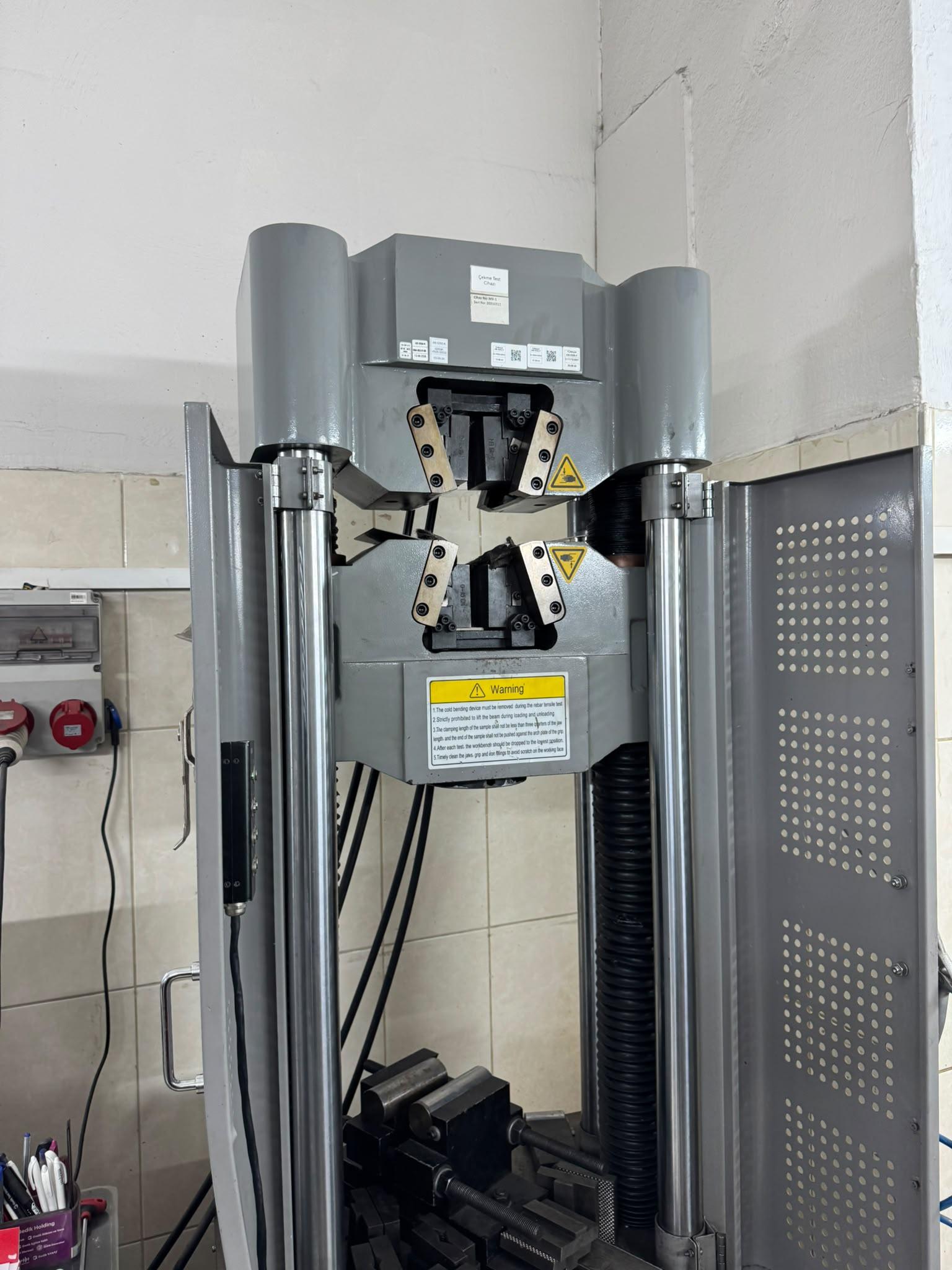
Tensile Test

Pulls a standard “dog-bone” specimen until it breaks, measuring how much load the material really carries.

Illustrative

XY · Parallel to layers

Z · Perpendicular to layers

Weak direction

The bond between layers is weaker than the layer itself; the Z direction is the weak one.

The same material has different strength depending on print direction. We measure how much load your part carries in each direction.

  • MPa · Yield strength
  • MPa · Stress
  • % · Elongation at break

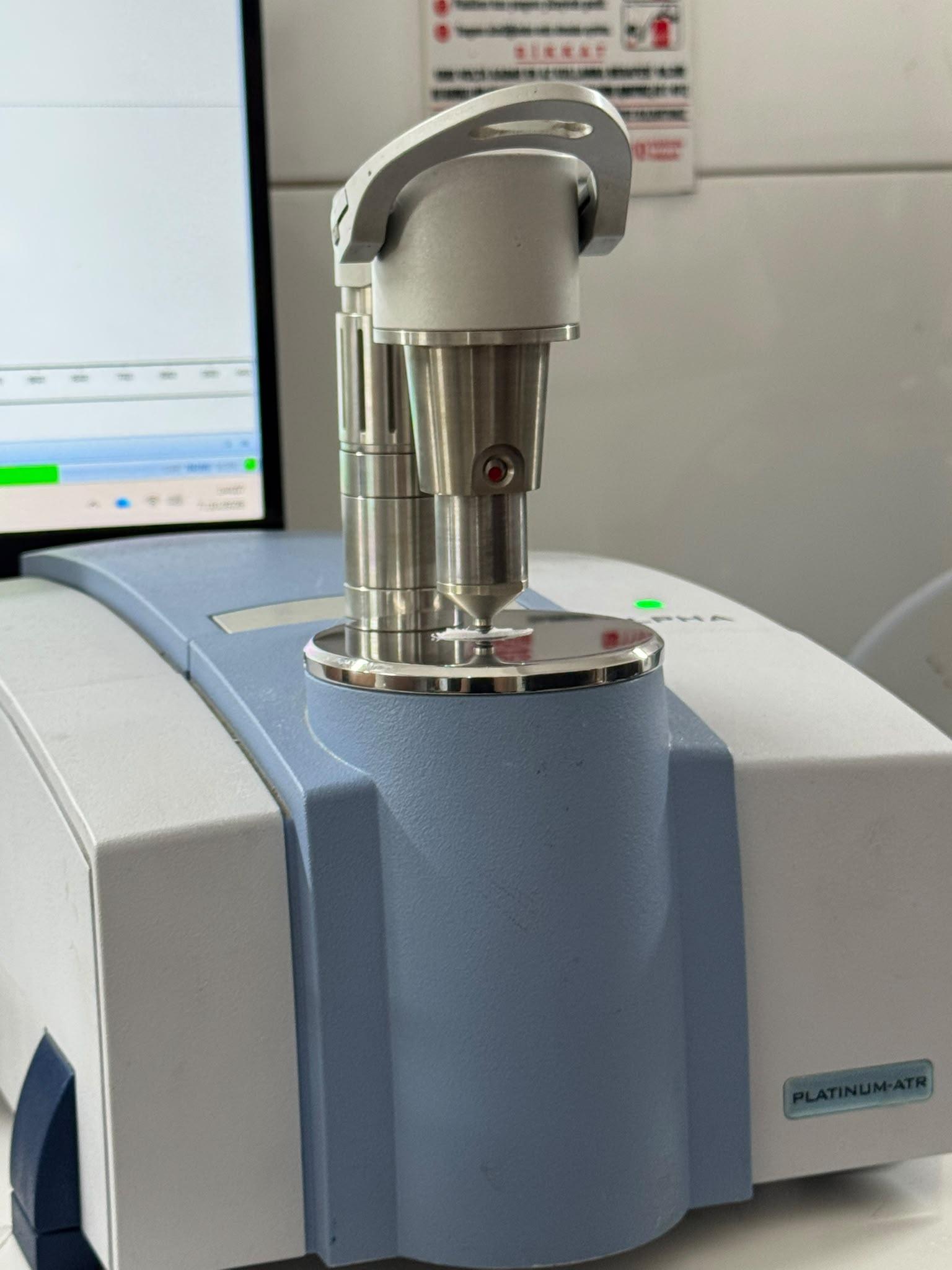
Chemical Analysis (FTIR)

Reads the part's chemical fingerprint with infrared light and identifies which plastic it's made of.

Illustrative

Don't know what plastic your broken part is made of? We measure it, then produce the part with a matching material.

In reverse engineering, we identify the original material.

  • Material type
  • Match rate
  • Spectrum
  1. 01Sample
  2. 02Test
  3. 03Analysis
  4. 04Report
  • FTIR instrument
    FTIR instrument
  • Tensile testing machine
    Tensile testing machine

Tests are carried out at the accredited Mekatest laboratory; Plasup 3D manages the process for you as the intermediary.

Mekatest(opens in a new tab)

TÜRKAK accreditation no.

Tensile testing and FTIR analysis of 3D-printed (plastic) samples are not within the scope of these accreditations; you can see the scope in the certificates.

Pricing

What determines your price?

Every part is different, so we don't have a fixed price list. But the cost components are clear. Here you can see how your choices affect the price.

  • 01

    Material

    Which material we use and how much of it.

  • 02

    Print time

    How long the machine runs to produce the part.

  • 03

    Preparation

    File check, layout, removal and clean-up after printing.

  • 04

    Finishing

    Surface treatments such as sanding, varnish or coating.

FAQ

Frequently asked questions

From file formats to delivery times, the questions we hear most. If you can't find what you're looking for, write to us and our engineer will get back to you.

  • For 3D printing we accept STL, STEP (.step / .stp), OBJ and 3MF files. STL is the surface model the printer reads; STEP is a solid model that can be edited in CAD software. When you upload STL or OBJ, you'll immediately see a 3D preview of the part and its dimensions on the site; STEP files are opened in our workshop.

    For design (CAD) requests you can send DWG, DXF, PDF, JPG and PNG. A photo of a hand sketch with dimensions written on it is enough — a professional drawing isn't required.

  • We print with the following materials:

    • PLA: Visual prototypes, models, indoor parts. Economical and fast.
    • PETG: General-purpose durable parts, housings in contact with liquids.
    • ABS: Automotive interior parts, parts working in warm environments.
    • ASA: The sun-resistant version of ABS; outdoor parts.
    • PC (Polycarbonate): Critical parts that need high temperature and impact resistance.
    • TPU: Flexible parts: gaskets, bumpers, bellows, grip surfaces.
    • PA-CF (Carbon fibre nylon): Fixtures, jigs and load-bearing engineering parts.
    • PET-CF: Technical parts that require dimensional stability.

    If you're not sure which to choose, use the “I'm not sure, you recommend” option in the quote form. We'll ask about the part's environment, temperature and load and recommend a suitable material; we make the final decision together after reviewing your file.

  • We can print parts up to 256 × 256 × 256 mm in one go. Larger parts can be printed in sections and joined; we note this separately in the quote.

    When you upload your file, the site automatically calculates the part's size and warns you if it exceeds the build volume.

  • Tolerance shows how far a printed part's dimensions may deviate from the drawing. The accuracy achievable with FDM printing depends on the material and the part's size and geometry.

    If there are dimensions that must be met, such as hole diameters or shaft spacing, enter them in the “critical dimensions” field of the form. We prioritise them during production and inspection and state the achievable accuracy in the quote.

  • Once your order is confirmed, delivery takes 3–7 business days. Within this range, the time depends on the part's size, quantity, material and chosen finish.

    For reverse engineering and design jobs, scanning and modelling time is added; we confirm the exact date after the initial review. For urgent jobs you can tick “Urgent” in the form; these are prioritised, and any extra charge is stated in the quote.

  • We have no fixed price list; each job is priced individually. The main factors are:

    • Filament type: The chosen material (PLA, PETG, PA-CF…).
    • Quantity: How many parts will be printed.
    • Finishing: Surface treatments such as sanding and priming.

    For reverse engineering and design jobs, scanning and modelling work is also added to the price.

    The initial review and quote are free; we send your quote within 24 hours.

  • We handle everything from single parts to small series. We can print up to 100 pieces in a single order.

  • We scan your broken part with our Creality CR-Scan Otter Lite 3D scanner to create a digital copy. Then, through reverse engineering — rebuilding the model from the existing part — we repair the broken and worn areas on the computer and make the part usable again.

    1. You send photos of the part through the form; place a ruler or a coin next to it in at least one of them.
    2. We review the photos, call you and ask for the sample.
    3. The part is scanned, the model is corrected on the computer and presented for your approval.
    4. After your approval, the part is printed and sent to you together with the original.

    If some sections of the part are missing, we complete them using engineering estimates and send you an interim image (render) for approval.

  • We serve all of Türkiye. You send your file or photos of your part through the form; if a sample is needed, we collect it by courier and ship your finished part to your address.

    In İzmir and Manisa we can also scan the part on site.

  • In İzmir and Manisa we can scan the part on site; this option suits parts that are mounted on a machine, hard to remove or too large to transport.

    From other cities, we collect your part through our contracted courier.

  • With a tensile test we measure the strength of the part or material: yield strength, stress and elongation at break. With FTIR chemical analysis we identify which plastic the part is made of.

    Tests are carried out at the accredited Mekatest laboratory; Plasup 3D manages the process for you as the intermediary.

  • Yes. For chemical analysis, a small cut-out from your part is enough. A tensile test needs a standard-size specimen: if you don't have one, send us your filament and we'll print the specimens with your material.

  • The bond between layers is weaker than the layer itself. That's why we test the part separately parallel to the layers (XY) and perpendicular to them (Z).

  • Yes. Tests are carried out at the accredited Mekatest laboratory; Plasup 3D manages the process for you as the intermediary.

    TÜRKAK accreditation numbers: AB-1875-T (testing laboratory), AB-0873-M (inspection body).

    Tensile testing and FTIR analysis of 3D-printed (plastic) samples are not within the scope of these accreditations; you can see the scope in the certificates.

  • The files, drawings and photos you send are stored with great care and used only for your request; they are not shared with anyone other than the infrastructure providers we use to deliver the service.

    On request, we sign a non-disclosure agreement (NDA — a contract in which the parties commit to keeping shared information confidential) with corporate customers.

  • Yes, all our work is invoiced; we issue invoices to individuals and businesses.

    We ship with our contracted courier. If you need to send a sample for reverse engineering, we call you and plan the shipping together; once scanning is done, your original part is returned to you along with the new one.

  • Of course. A broken household part, a hobby project or a personal design — we work with individual customers too. Just choose “Individual” as the invoice type in the quote form.

Contact

Get in touch

For a quote, please use the forms on the service cards. If you have a quick question, write to us, call us or reach us on WhatsApp.

Workshop
Esatpaşa Mah. 1210 Sok. No: 29Menemen / İzmir
Opening hours
Every day, 24/7
Message us on WhatsApp

The map is loaded via Google Maps; Google may use cookies.

Esatpaşa Mah. 1210 Sok. No: 29, Menemen / İzmirGet directions

Quick message

For anything you'd like to ask before sending a file. We'll get back to you as soon as possible.